Introduction
Metabolic dysfunction-associated steatohepatitis (MASH) is a liver metabolic disease caused by hepatic steatosis and chronic inflammation induced by nutritional excess. It is characterized by abnormal fat accumulation in the liver, lobular inflammation, and hepatocyte ballooning degeneration, and may progressively develop into liver fibrosis, cirrhosis, or even hepatocellular carcinoma.
Disease models
As key research tools, MASH mouse models not only help us better understand the pathogenesis of MASH and subsequent disease progression, but also can be used to develop and validate new therapeutic strategies, thereby laying a solid foundation for clinical trials.
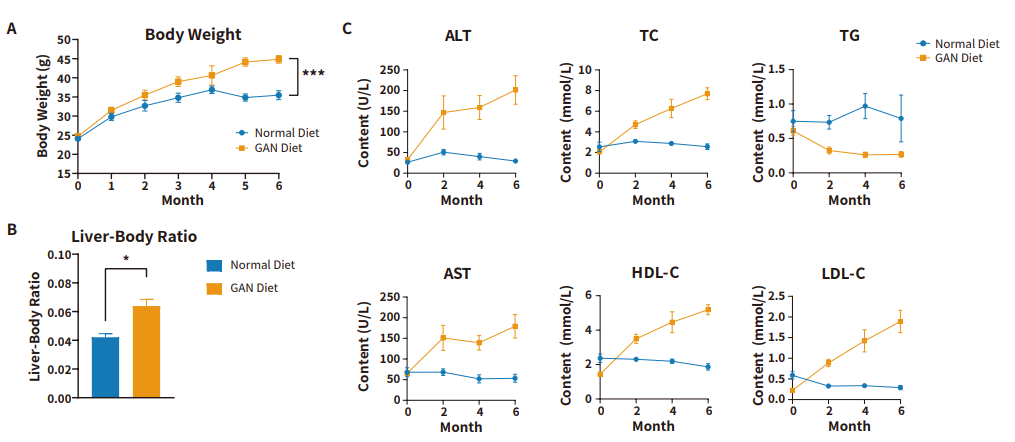
Fig1. GAN-diet induced MASH Model.
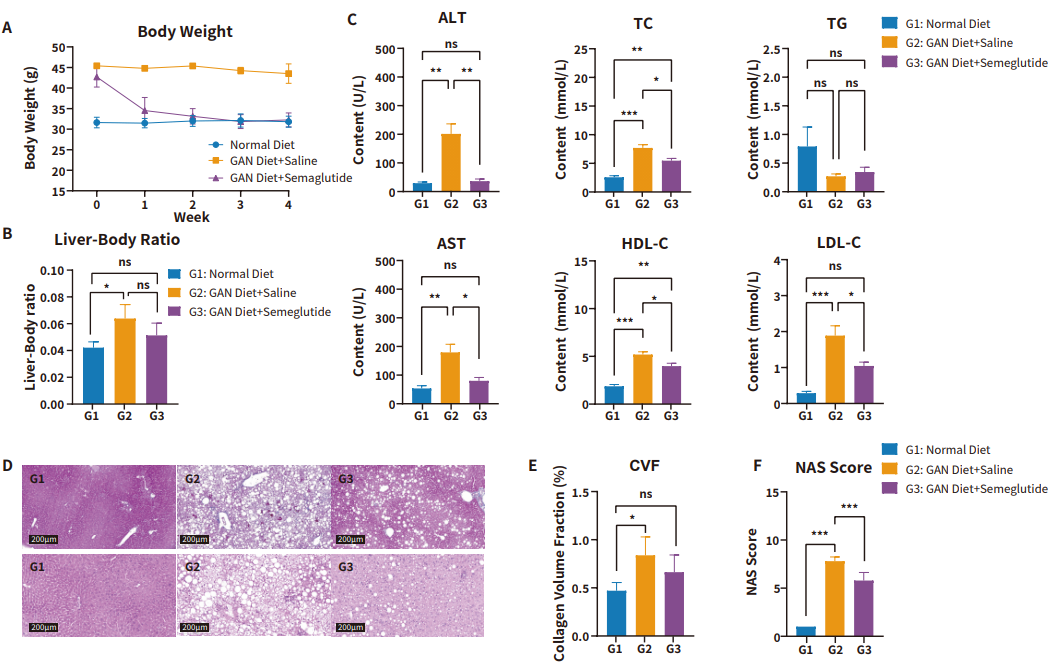
Fig2. Semaglutide efficacy on GAN Diet induced MASH model.

Fig1. HFD and CCl4 induced MASH model.

Fig2. OCA efficacy on HFD and CCl4 induced MASH model.


